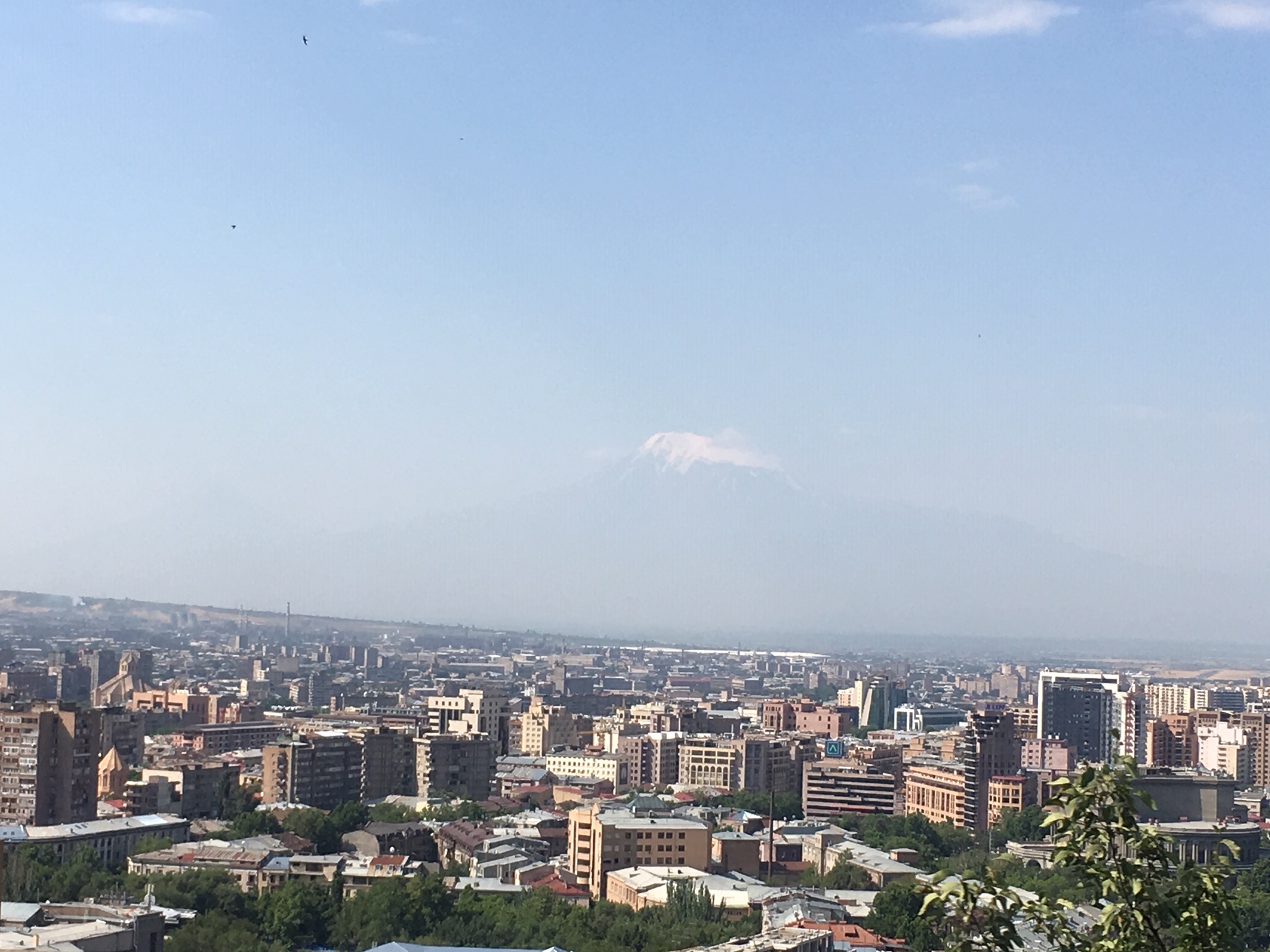
On Thursday I saw Mount Ararat with my own eyes, for the first time in my life. It was a hazy day, so I only saw the peak of Massis, and you cannot see the shorter peak (Sis) at all from this picture. But it’s been a lifelong dream of mine to see Mount Ararat. It’s very central to Armenian identity. Sadly, from Hayastan (The Republic of Armenia) it is difficult to go there, because the mountain is in Turkey (Western Armenia). For a long time there was a NATO missile base there and there may still be one. Ararat is one of the important things that was taken from us. In this sense, I feel that my experience is parallel to that of the First Nations Americans,many of whose lands and holy mountains were appropriated away from them by the U.S. government.
When I looked upon the mountain, I imagined that I was helping my father’s spirit alight on the snow-capped peak. My father never saw Ararat with his own eyes, so I am seeing it for him.
I got my first view of Ararat from the Armenian genocide museum, which is atop a hill in Yerevan. The outdoor memorial has an eternal flame, with stones leaning over it in pain. In the picture below, you can also see that many people bring flowers to lay near the flame.
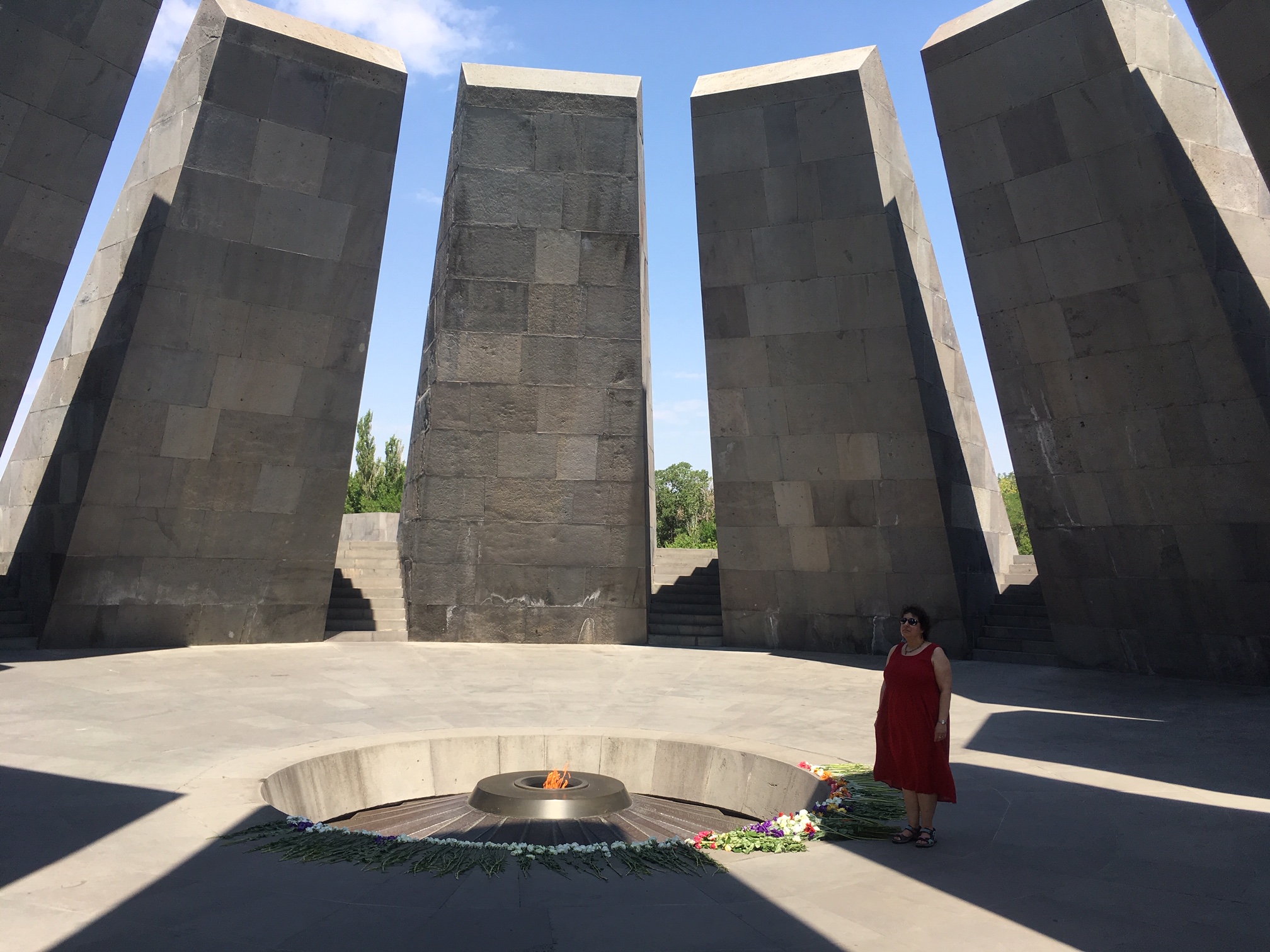
There is also a plaza as part of the memorial which symbolizes the graves of the 1.5 million Armenians who perished and did not have respectful burials. There are also engraved names of the cities and provinces where the genocide took place, as well as tributes to some of the notable people who tried to help or who witnessed.
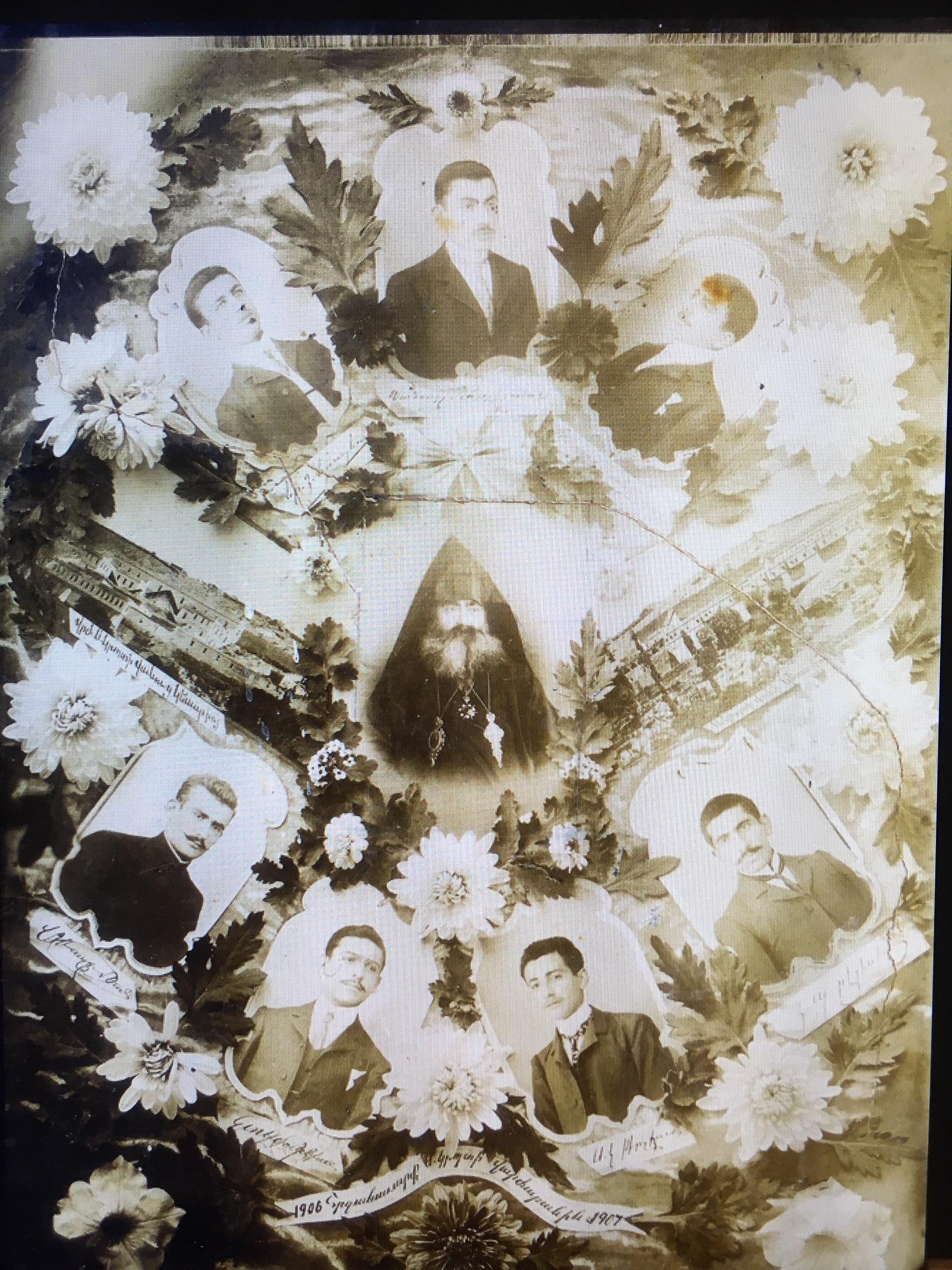
Inside the museum there is an historical timeline of the genocide, and there I found a photo of my ancestor (my great-great grandmother’s brother, Drtad Balian). He was the bishop of Gesarya, and he started a school there. This picture is of some of the school’s graduates, with Drtad in the center.
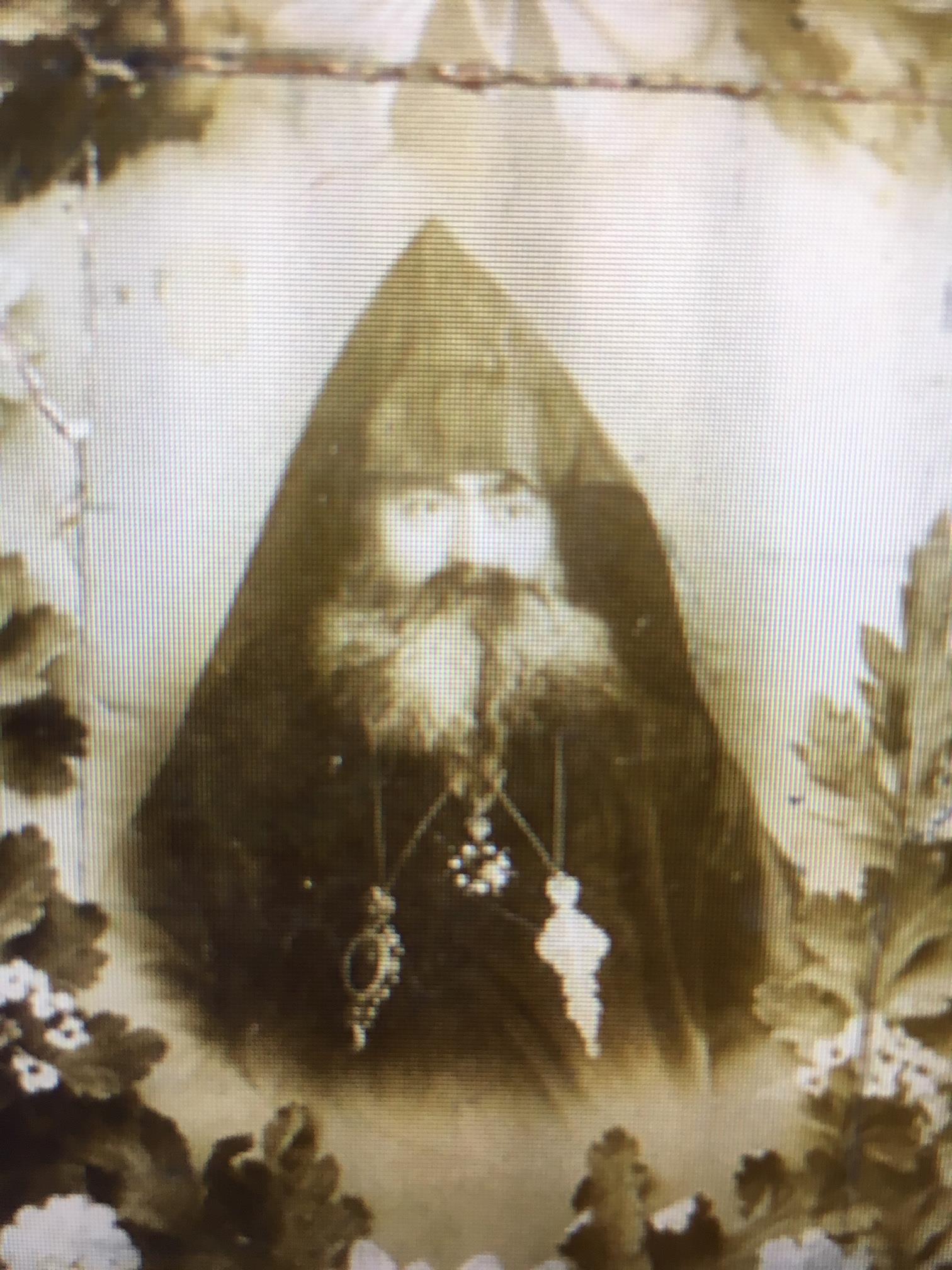
My grandmother always told me “you have the bishop’s eyes.” This closeup is fuzzy, but perhaps it shows eyes like mine.
Given how much of our our genealogical records were lost and how much the genocide ripped families asunder, it is amazing that I have a photo of an ancestor from this many generations back. Drtad helped the Armenians of Gesarya fight off the Turkish attackers. Later he died in the burning of Smyrna in 1922. There were two churches in Gesarya, and Drtad chose to work at the one where the poor people lived. He was a collector of art and manuscripts and he wrote a catalog of his (the church’s) collection. So I think he set an example of working for social justice and being a scholar that has in some way come down to me.


 A pilgrimage to Armenia
Janice, this is amazing.
LikeLike
Thank you for taking your friends with you on this amazing journey!
LikeLiked by 1 person
How awesome that you can visit these places and connect so powerfully to the ancestors and their story. The picture of you at the memorial is very moving. 💔
LikeLiked by 1 person
Fascinating to have photos of family from that period and during such strife. Any possibility of hiking Ararat? Only the summit cone requires crampons and ice axe.
LikeLike
Matt — I think people do climb it, yes. I don’t know what kind of permissions the Turkish govt. would require; also, that part of Turkey (which we Armenians call Western Armenia) is not very stable or safe right now because of the Turks fighting with Kurds. But you should try it!
LikeLike
I am so glad you have got to be there. Your stories are beautiful.
LikeLike